
Johnsontown Park Mini Forest: Growing Together
Restoring native forests, nurturing biodiversity, and connecting community in Downingtown, Pennsylvania.
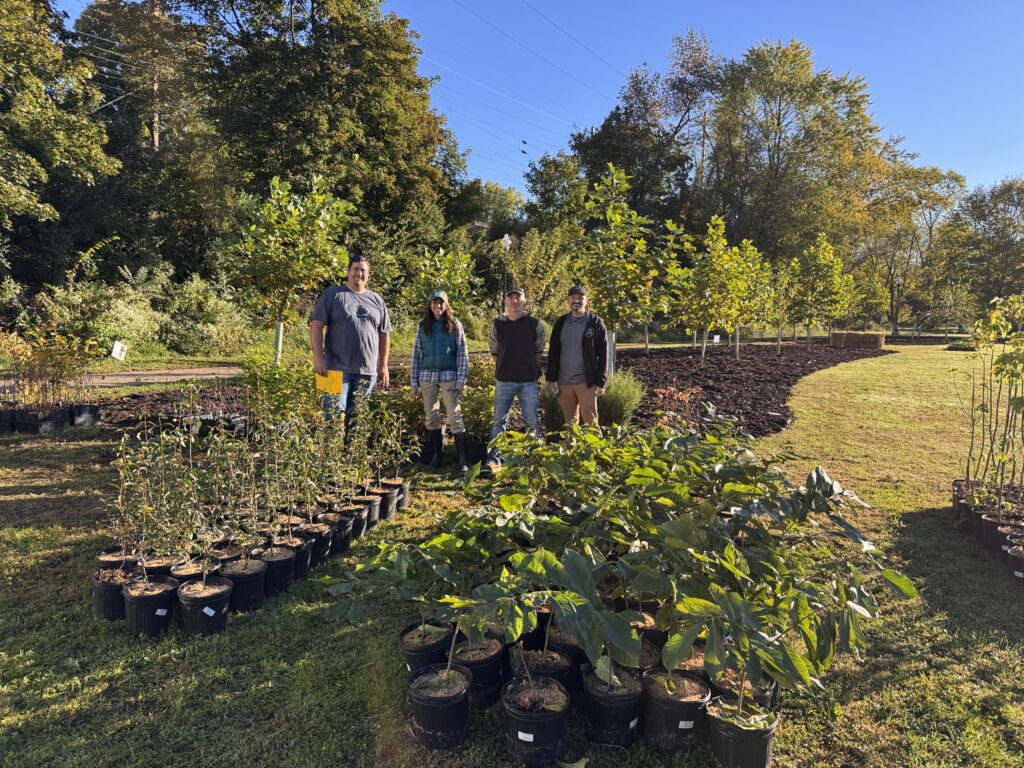
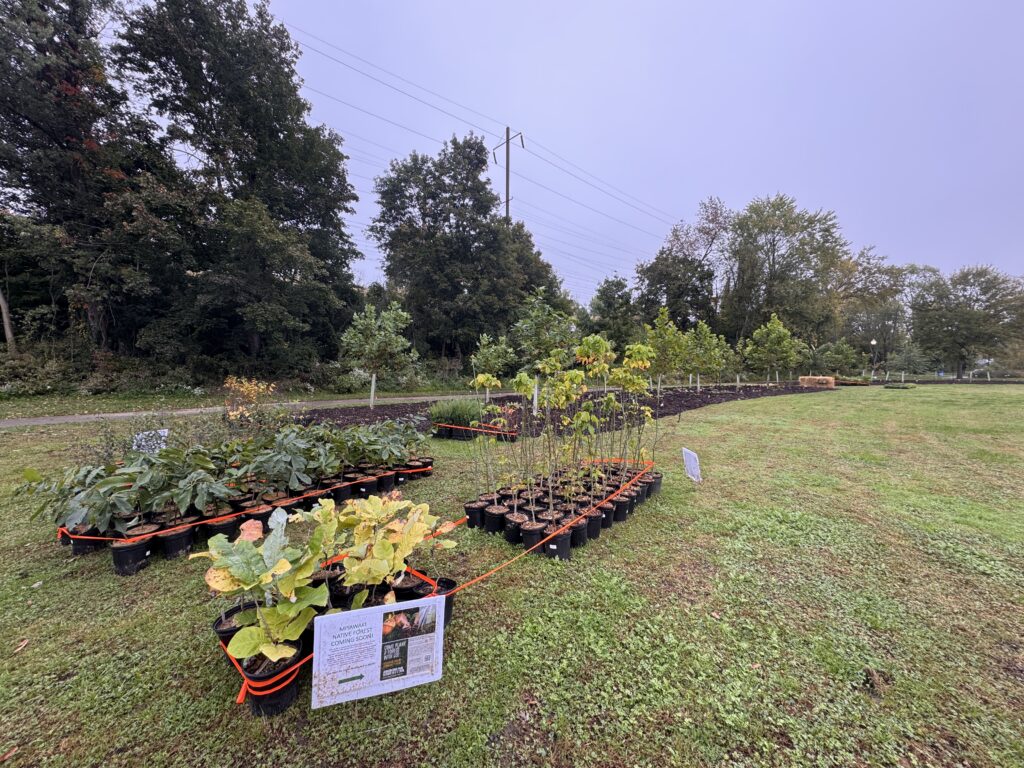
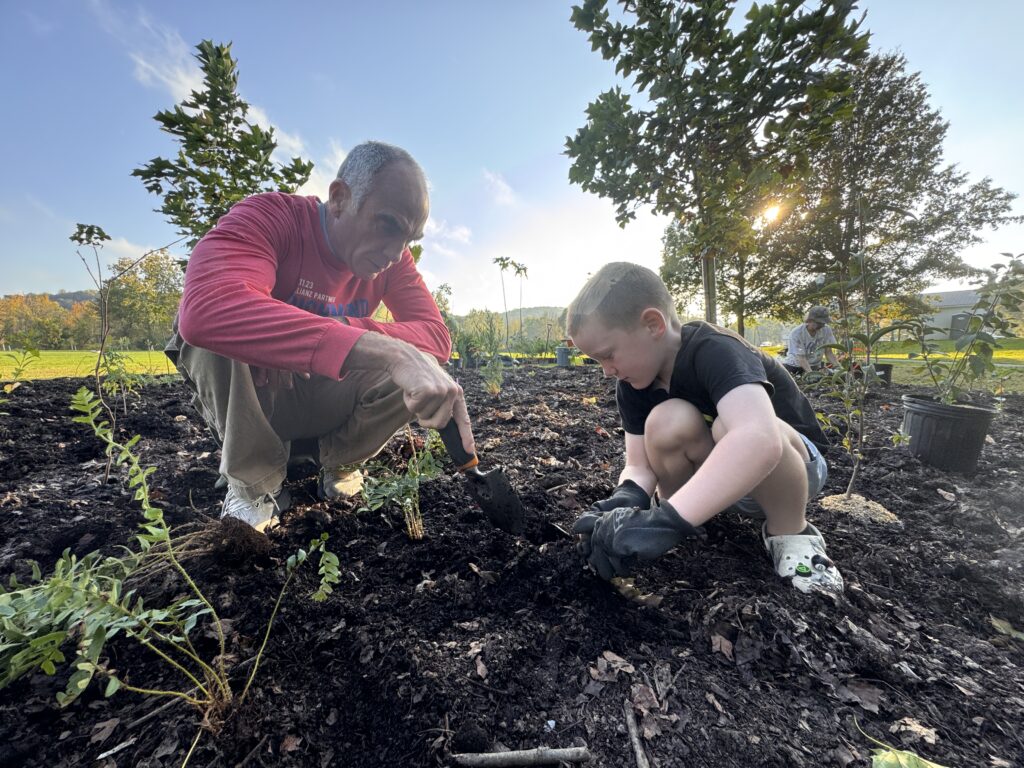
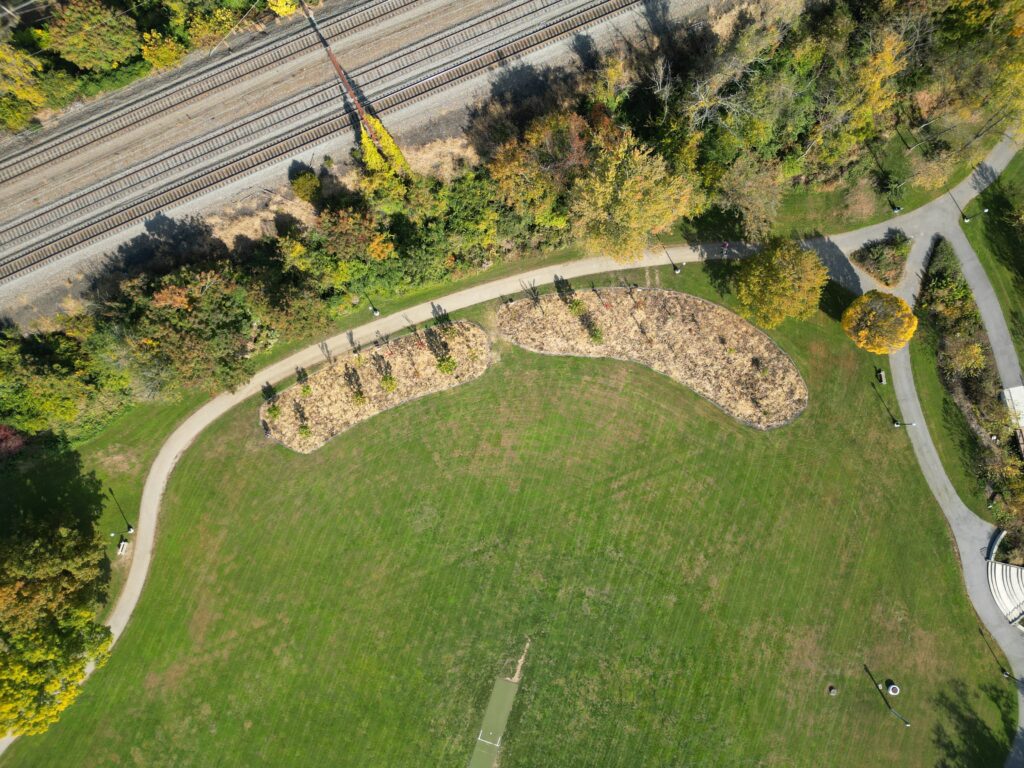
In October 2026, something special took root in Johnsontown Park. Neighbors, families, volunteers, and community partners came together to plant more than 1,000 native trees, shrubs, and other plants, transforming two areas of the park into the beginnings of a thriving native mini forest.
Inspired by the Miyawaki method of ecological restoration, this project is about more than planting trees. It’s about restoring habitat, supporting healthy soil and water, reconnecting people with nature, and creating a living legacy for future generations.
This forest will grow and change with the seasons, and we invite you to grow alongside it.
What Is a Mini Forest?
A mini forest, sometimes called a micro forest or Miyawaki-inspired forest, is a small, densely planted area designed to encourage the development of a diverse native forest ecosystem.
The approach draws inspiration from the work of Japanese botanist Dr. Akira Miyawaki, who developed methods for restoring native forests by planting a diverse mix of locally appropriate species (trees, shrubs, groundcovers).
Unlike traditional landscaping, where individual trees may be widely spaced and surrounded by lawn, mini forests bring together multiple layers of vegetation, including canopy trees, smaller understory trees, shrubs, and groundcover plants.
As the plants establish, they begin to create a living community, providing shade, leaf litter, habitat, and the conditions for an increasingly complex forest ecosystem.
The Johnsontown Park Mini Forest adapts this approach to the ecology of southeastern Pennsylvania, using native plants suited to our region.
Why Grow a Mini Forest?
Even small patches of native forest can provide important ecological benefits, particularly in developed landscapes where natural habitats have been fragmented or removed.
As the Johnsontown Park Mini Forest grows, it has the potential to:
- Support biodiversity. Native trees, shrubs, and groundcovers provide food, shelter, and habitat for birds, pollinators, and other wildlife.
- Protect soil and water. Roots, leaf litter, and healthy soils can improve infiltration, reduce runoff, and help protect local waterways.
- Create shade and moderate temperatures. As trees mature, their canopies can provide cooling and create more comfortable conditions for people and wildlife.
- Store carbon. Growing plants absorb carbon dioxide through photosynthesis and store carbon in their tissues and surrounding soils.
- Reconnect fragmented habitats. Small native plantings can contribute habitat and resources within a larger network of urban and suburban green spaces.
- Bring people closer to nature. The forest offers opportunities for observation, learning, restoration, and connection with the living world.
These benefits will develop over time. The mini forest is a long-term ecological restoration project, and observing how it changes will be part of the experience.
From Lawn to Living Forest: Our Community Planting
The Johnsontown Park Mini Forest began with a vision to transform portions of the park into a more diverse, ecologically valuable landscape.
Led by Restore Our Roots and the Downingtown Shade Tree Commission, the project brought together local organizations, conservation professionals, municipal staff, and community volunteers.
Two planting areas, totaling approximately 5,945 square feet, were prepared for restoration. Both areas were planted using the same general approach and planting density, with a diverse mix of native trees, shrubs, and smaller plants.
In preparation for planting, the site was cleared of existing turf and covered with composted leaf litter to help protect the soil, conserve moisture, and create conditions favorable for plant establishment.
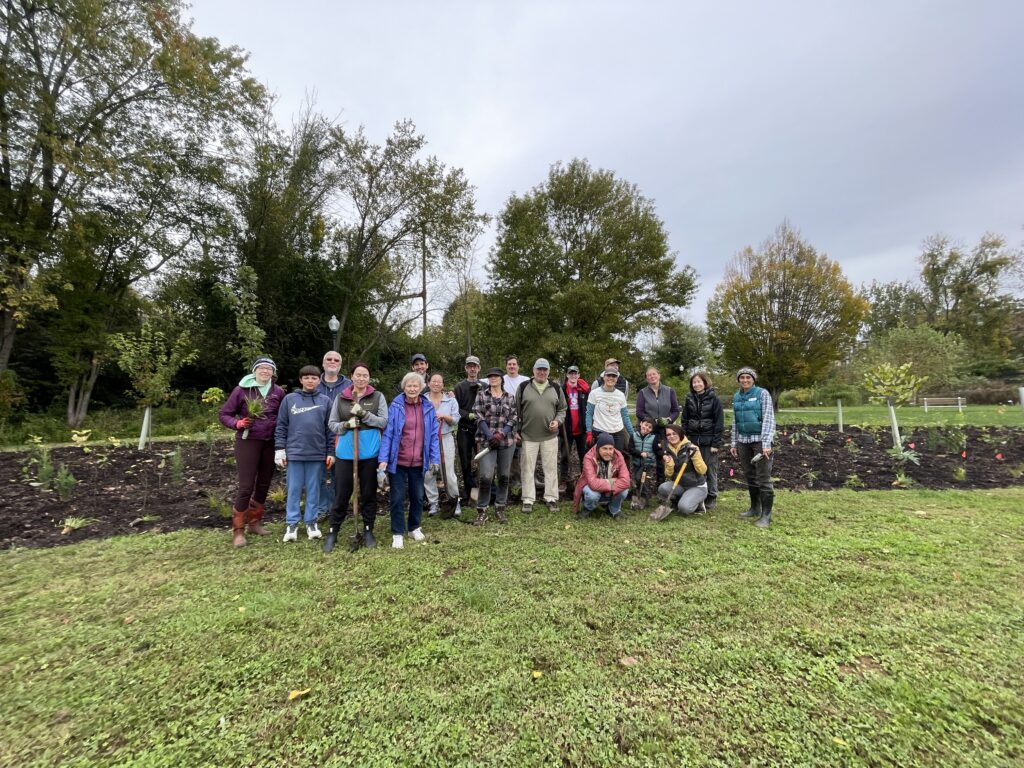
On October 16 and 17, 2026, volunteers gathered to bring the forest to life. Together, we planted more than 1,000 native plants!
A Forest of Many Layers
A healthy forest is much more than its tallest trees.
From the canopy overhead to the soil beneath our feet, forests are made up of interconnected layers of life.
Canopy trees eventually form the uppermost layer, providing shade, wildlife habitat, and organic matter as their leaves fall.
Understory trees grow beneath and between taller trees, adding structural diversity and supporting wildlife.
Shrubs provide flowers, fruits, cover, and nesting opportunities for birds and other animals.
Groundcovers and herbaceous plants protect soil, support pollinators, and contribute to the forest floor.
Soil organisms and fungi help decompose organic matter, cycle nutrients, and sustain the living soil community.
By bringing these layers together, the mini forest is designed to develop into a diverse native plant community rather than a simple collection of individual trees.
Meet the Plants
The mini forest contains a diversity of native plants selected to reflect regional forest ecology and provide resources for wildlife. We referenced the Pennsylvania Natural Heritage Program (PNHP) Plant Community Classification tool, published by the Pennsylvania Department of Conservation and Natural Resources (DCNR).
Explore the Johnsontown Park Mini Forest Plant List
A Forest to Experience, Not Just Observe
We often think of forests as places somewhere else—large wooded landscapes, distant parks, or wilderness areas.
But a forest can begin right here, in the heart of our community.
The Johnsontown Park Mini Forest invites us to slow down and rediscover our relationship with the natural world.
Pause for a moment. Notice the changing light, the movement of leaves, the sounds of birds, or the quiet activity of insects. Consider the soil beneath your feet, the water moving through the landscape, and the countless relationships that sustain life.
We are not separate from these systems. The air we breathe, the water within us, and the living world around us are deeply connected.
As the forest becomes established, we envision removing the protective fencing and creating a pathway through the planting. Small interpretive signs and field guides will invite visitors to discover native plants, observe ecological relationships, and experience the forest through their senses.
For now, we ask visitors to enjoy the developing forest from outside the protective fencing so the young plants and soils have time to establish.
Visit often. Notice what changes. Allow the forest to become a familiar place in your life.
Growing and Caring for the Forest
Planting a forest is only the beginning.
During the first several years, the young plants will need ongoing care as their roots establish and the forest community develops.
Volunteers and project partners will help with monitoring, watering when needed, managing competing vegetation, maintaining protective materials, and documenting changes over time.
We also hope to follow the forest’s development through photographs and observations, learning which plants thrive and how wildlife begins to use the habitat.
This is an opportunity for community members to participate in long-term stewardship and witness ecological restoration firsthand.
Join the Mini Forest Care Team
Would you like to help care for the Johnsontown Park Mini Forest or participate in other restoration projects around Downingtown?
Whether you have years of gardening experience or are just beginning to learn about native plants, there’s a place for you.
Volunteer with Restore Our Roots
Rooted in Community: Our Partners and Supporters
This project is possible because of the generosity, expertise, and dedication of many organizations and individuals who share a commitment to healthier landscapes and stronger communities.
Funding Acknowledgment
This restoration project was made possible by the Trees for Watersheds Grant program, managed by the Pennsylvania Horticultural Society and local conservation districts, with funding from the Pennsylvania Department of Environmental Protection’s Growing Greener program, Aqua, an Essential Utilities Company.
With Gratitude to Our Community Partners
We extend our heartfelt appreciation to:
- Pennsylvania Environmental Council
- Stroud Water Research Center
- Downingtown Shade Tree Commission
- Downingtown Public Works
- Restore Our Roots
- Penn State Master Watershed Stewards
- PA Seedling Co-op
And to the many volunteers who gave their time, energy, and care to plant this forest: thank you!
Your efforts are helping create a living legacy for wildlife, water, soil, and generations of people who will experience this place.
Follow the Forest’s Journey
The Johnsontown Park Mini Forest is just beginning.
Over the coming months and years, we’ll share updates, photographs, plant highlights, seasonal observations, and opportunities to get involved.
We hope you’ll return to watch the forest grow—and perhaps discover something new about your own connection to the natural world.
Small forest. Deep roots. Growing together.